Adding rubber sole protectors is a decisive step in increasing the longevity of your leather shoes. If your goal is to protect your soles and prevent rapid wear, opting for rubber sole protectors is an excellent strategy.
These accessories offer reinforced protection for your soles, minimizing the risk of damage related to impact and moisture. Before having them fitted, it is important to understand the benefits they provide, know the varieties of sole protectors available on the market, and understand the steps for an optimal installation.
In this article, Galoche & Patin guides you through these key elements, helping you take care of your shoes as effectively as possible by adding sole protectors.
Advantages of adding rubber sole protectors to shoes
Protection against wear
Rubber sole protectors offer significant protection against premature sole wear. Rubber, a robust material, effectively resists impact and moisture, reducing the risk of damage. This helps extend the life of your shoes, saving you the cost of early resoling.
Improved comfort and grip
Rubber sole protectors improve the comfort and grip of shoes. Thanks to natural rubber, shoes remain breathable, avoiding moisture retention that could make them uncomfortable.
Furthermore, the rubber sole protector makes the sole non-slip, a significant advantage for preventing slips on smooth or wet surfaces.
Preserving the shoe’s original style
Adding rubber sole protectors allows you to preserve the style of the shoe, because they blend in with the color of your shoe, thus maintaining its aesthetic.
This aspect is particularly valued for formal or elegant shoes, where maintaining appearance is essential.
Types of rubber sole protectors and selection criteria
Different types of sole protectors available
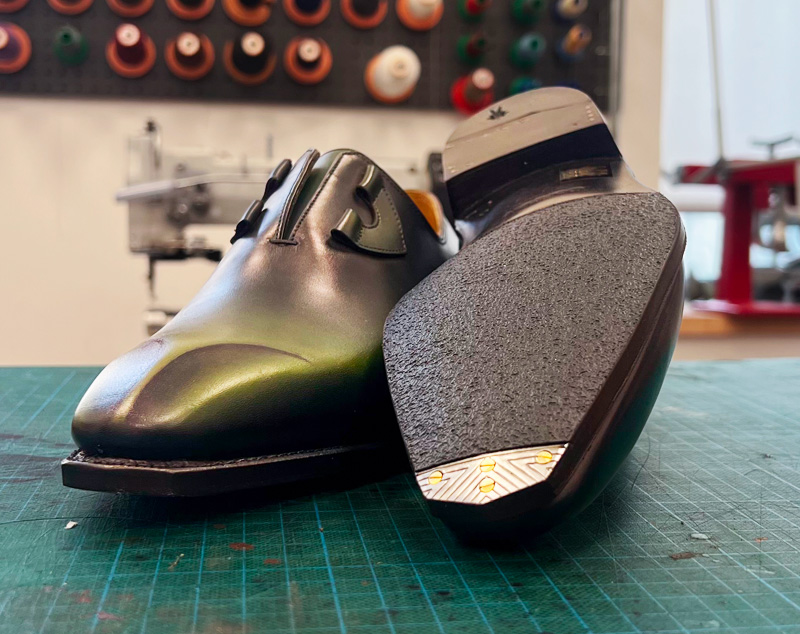
A sole protector is fitted under a leather sole to protect it from wear and moisture. Depending on the shoe and how it is worn, your cobbler chooses a full sole protector, covering the whole front of the sole, or a half sole protector limited to the tread area, thicker or thinner, smooth or textured for grip, and in a shade matched to the sole. The protector is glued, then pressed; its edges are then sanded and dyed to blend into the sole.
Selection based on shoe type
Choosing the right rubber sole protector requires considering the type of shoe. For leather shoes, prioritize sole protectors that complement the sole discreetly, thus preserving their aesthetic. Sports or hiking shoes, meanwhile, will benefit from sturdier, non-slip sole protectors. It is also important to ensure that the sole protectors are compatible with the shape and size of the sole.
In summary, fitting rubber sole protectors is an effective method to preserve your shoes and extend their lifespan.
By opting for high-quality sole protectors and asking Galoche & Patin to fit them for you, you can avoid unnecessary expenses related to premature resoling. Additionally, this will allow you to enjoy a walking experience that is both more pleasant and safer. So take the right steps to protect your shoes and ensure their longevity.
Frequently asked questions about adding sole protectors
A shoe sole protector is a thin rubber sole, attached to the leather sole to protect it from wear. It also helps prevent slipping and stop water from entering the shoe, while protecting the welt stitching. This helps extend the life of the sole.
It is advisable to add a sole protector either immediately after purchase of the shoes, to protect the new sole, or after a few wears, which allows the shoe to better adapt to your foot. Although cobblers may have different opinions, early fitting is often recommended to ensure optimal protection.
Adding toe taps to your shoes is a practice aimed at protecting the sole, particularly the front area, against impact and wear. This technique helps extend the life of the shoes, prevent water infiltration, reduce premature wear and maintain the shape of the sole.
Resoling shoes is an excellent way to extend their lifespan, maintain comfort and reduce environmental impact.