
Resoling is a repair and renovation process performed by a skilled cobbler in our shop, allowing you to extend the lifespan of your shoes while preserving their comfort and appearance. Our repairs offer excellent value for money and contribute to the sustainable maintenance of your favorite footwear.
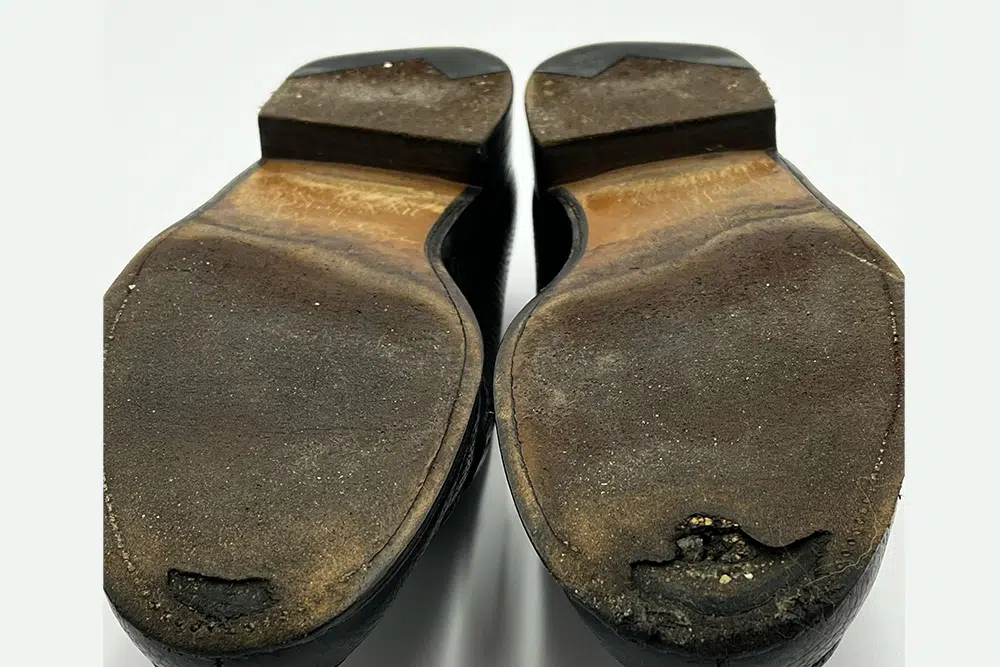

Leather resoling is a repair and renovation process carried out by professional cobblers, extending the life of your shoes while maintaining their comfort and look. This technique is often used for high-quality footwear, such as boots and black leather shoes, where the original sole or heel is worn or damaged, but the rest of the pair is still in good condition.
The leather resoling process, performed in our workshop, includes several carefully planned steps:
The first step of the repair consists of carefully removing the worn or damaged sole from the shoe. This often includes ungluing or unpicking the stitching of the outsole as well as the heel, using specialized tools in our workshop.
After removing the sole, the shoe is prepared for the new one. This preparation can include cleaning, repairing any minor damage to the shoe’s structure, and roughing the surface to ensure a strong bond in our workshop.
A new leather sole is then attached to the shoe using precise stitching and welting techniques. The leather is carefully selected from our stock to match the customer’s request, offering many possibilities, such as switching from a crepe sole to leather or rubber, or vice versa. This step can include gluing and stitching the new sole in our workshop.
Once the new sole is in place, the edges are carefully trimmed and sanded to fit the shoe perfectly. The heel is also repaired or replaced if necessary, ensuring a proper build. The sole can then be stained and treated, and sole protectors can be added to reduce wear, matching the shoe’s original appearance.
Our cobblers often recommend adding protection such as sole protectors or toe plates to prolong the longevity of your new soles, ensuring better wear and increased durability.
Finally, in our workshop, the shoe is inspected to ensure the resoling was done correctly and that it is ready to be worn again. It is then polished to restore its shine, completing the repair process.
Leather resoling, offered by our shop in France, is a service appreciated by those who want to keep their favorite shoes, as it gives a new lease of life to quality pairs. By choosing our repair services, you save money and also contribute to a sustainable approach by avoiding throwing away shoes that can still be worn for many years.
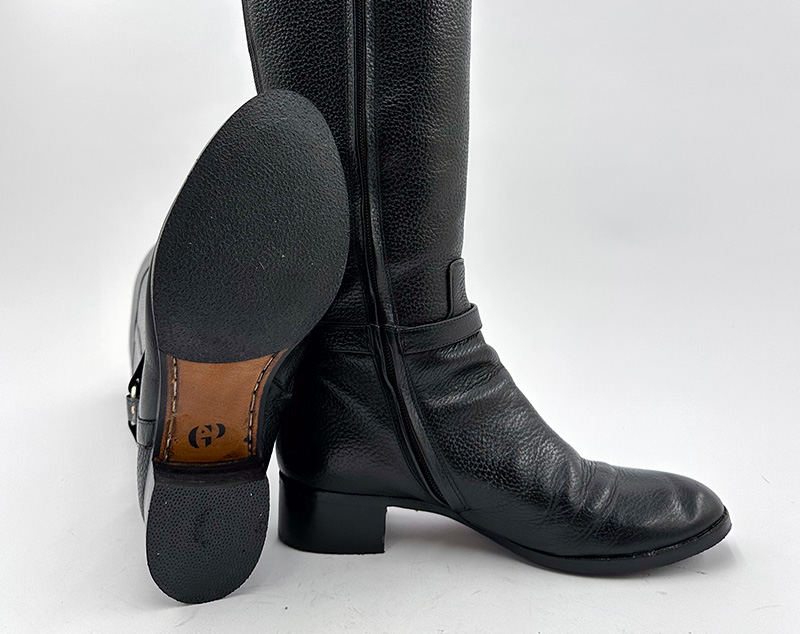
Rubber resoling is a shoe repair process that involves replacing the worn sole (rubber, leather, or crepe) with a new rubber sole. This technique is commonly used to extend the life of everyday shoes or models subject to heavy use, such as hiking boots, work boots, or sneakers.
The resoling process, carried out by our cobblers in our workshop, includes several key steps:
The first step is to remove the worn sole from the shoe. This repair operation requires specialized tools available in our workshop to carefully detach the sole without damaging the pair of shoes.
Once the old sole is removed, the bottom surface of the shoe is cleaned and prepared for the application of the new sole. This includes meticulous maintenance, roughing the surface, and applying a special adhesive in our workshop.
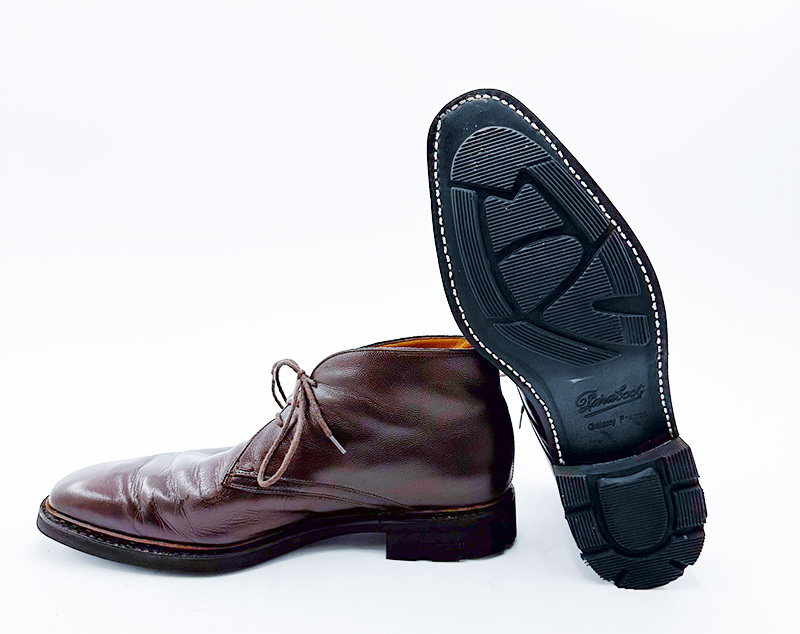
A new rubber sole is then glued or stitched to the shoe, depending on the type of shoe and the chosen resoling method. Our cobblers use high-quality stitching and welting techniques in our workshop, drawing from our stock of materials to guarantee durable products. Rubber is often preferred for its durability, wear resistance, and grip on different surfaces.
After attaching the new sole, the edges are smoothed to ensure a clean finish. The shoe can also be treated with specific care products in our workshop to restore its original appearance and ensure optimal maintenance.
By resoling with rubber in our shop, you also have the option of getting custom soles to meet your needs, whether for sneakers, boots, or other footwear. This improves the comfort and performance of your shoes and allows you to choose from a list of products available in stock or for purchase.
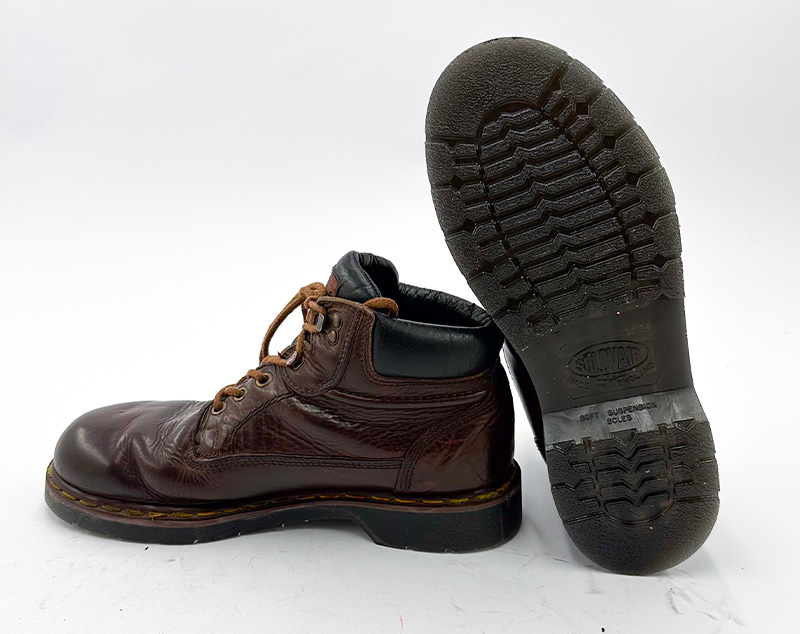
Rubber resoling allows you to extend the life of your favorite shoes instead of replacing them. Furthermore, it often improves the comfort and performance of the shoe, especially if the original sole was damaged or worn.
Crepe resoling is a repair and renovation process aimed at replacing the worn sole with a new crepe sole, a flexible and slightly elastic material often used for its comfort and grip qualities.
Here is how the crepe resoling process takes place in our workshop:
The first step is to remove the worn sole. This is generally done by carefully detaching the sole from the shoe using specific tools from our workshop, taking care not to damage the upper part of the shoe.
Once the old sole is removed, the surface of the shoe is cleaned and prepared for the application of the new sole. This includes meticulous maintenance, roughing the surface, and applying a special adhesive in our workshop.
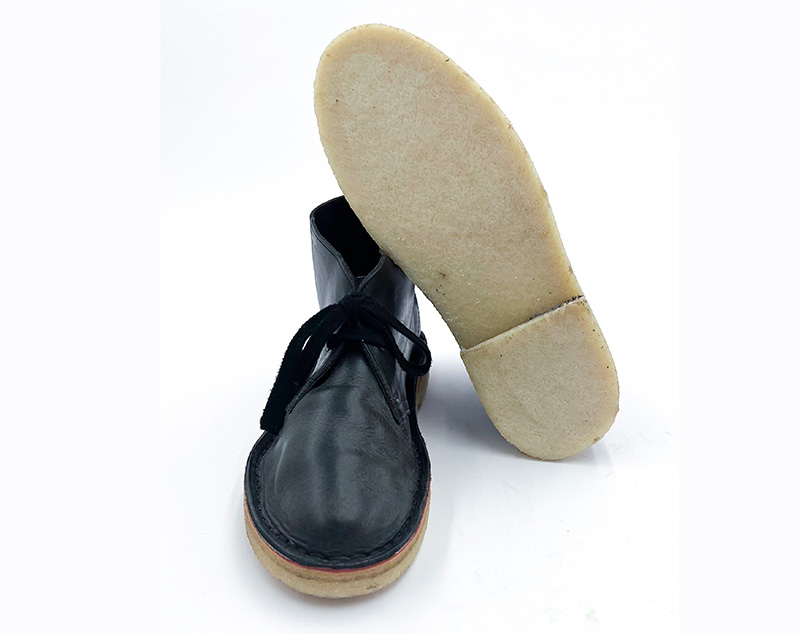
The new crepe sole is cut to the exact size and shape of the shoe in our workshop. It is then attached to the shoe using a strong adhesive and sometimes pressure or stitching techniques to ensure perfect adhesion. Depending on the customer’s preference regarding the height of the new sole, it is possible to add new layers of crepe that will be heat-sealed or stitched.
If necessary, the sole can be lightly sanded in our workshop to achieve a clean and uniform finish.
Taking care to maintain your shoes afterwards with a suitable polish and a maintenance kit offered by our shop can also increase the lifespan of your resole.
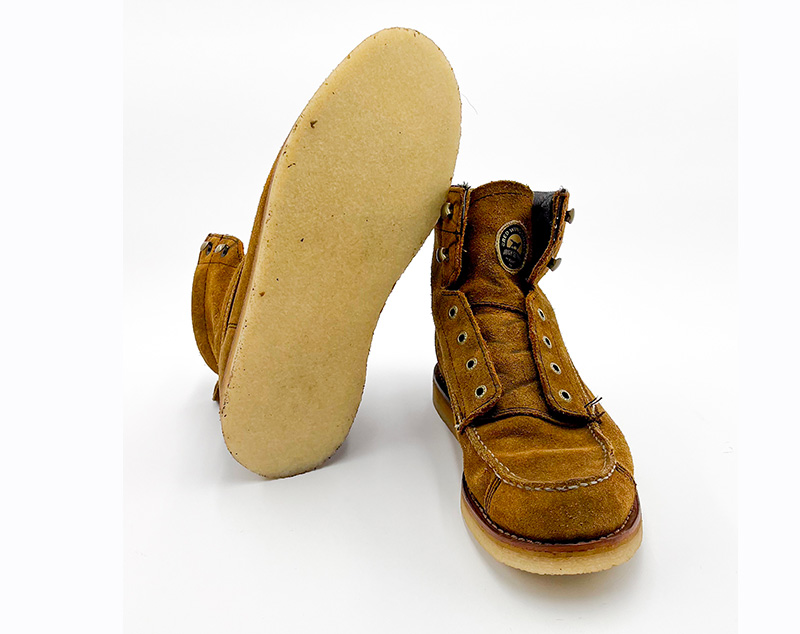
Crepe resoling is an excellent way to extend the life of your favorite shoes while maintaining their comfort and style. This type of repair is always performed by experienced cobblers in our workshop, as it requires real expertise and specific know-how in stitching and welting to guarantee a quality result.
Resoling consists of replacing the worn outsole of a shoe with a new one, performed by our cobblers in our workshop, thus allowing you to extend its life while restoring its comfort and appearance.
It is time to resole a shoe when the outsole is visibly worn, has holes, or is too smooth, which reduces grip. Regular maintenance at our shop and appropriate resoling performed in our workshop can prevent these problems. If you feel that the cushioning is weakened or the shoe is becoming uncomfortable, this can also indicate that a resole is necessary.
Most quality leather shoes, such as dress shoes, boots, or even some high-end sneakers, can be resoled in our workshop thanks to the expertise of our cobblers.
The price of resoling varies according to the type of shoe, the materials used, and the resoling technique (Goodyear, Blake, etc.). You can check our price list in our shop or online to choose the best option for your needs.
A good resole can last several years, depending on how often the shoe is used and the conditions in which it is worn. Well-maintained shoes (polishing, shoe trees, regular maintenance at our shop, etc.) will last longer after a resole performed in our workshop.
No, a quality resole performed by an experienced cobbler in our workshop does not alter the shoe; on the contrary, it can give it a new lease of life. However, it is important to entrust this task to a qualified professional to guarantee an optimal result.
Yes, as long as the upper (the top part of the shoe) is in good condition, a shoe can be resoled several times in our workshop. Shoes with stitched soles, like Goodyear or Blake, are particularly suitable for multiple resoles thanks to their durable stitching method.
Yes, you can often choose from a list of sole types available in stock, such as leather, rubber, or specific soles for certain conditions (non-slip, for example). A good cobbler in our workshop will be able to advise you according to your needs and preferences.
The Goodyear welt is a more complex resoling technique where the sole is stitched to a welt, which is then connected to the upper. This stitching method performed by our cobblers in our workshop facilitates successive resoles and extends the life of your shoes.
The Blake stitch, on the other hand, stitches the sole directly to the upper, using a technique performed by our cobblers in our workshop. This makes the shoe more flexible, but a bit less easy to resole than the Goodyear.
Home » Shoe Repair » Resoling
Get a free estimate for the cost of my repairs using my photos